Baking Soda Burned My Armpits. Here's What to Use Instead.
You did the responsible thing. You switched to a natural deodorant, felt briefly virtuous about it, and then your underarms turned on you. Red, stinging, maybe a little raw. The kind of irritation that makes you raise your arm carefully, like the area is now negotiating with you.
If that is you, the good news is that you are almost certainly not allergic to natural deodorant as a whole. You are reacting to one specific ingredient that a lot of natural brands lean on far too heavily: baking soda.
Here is what is actually happening, and what to reach for instead.
Why baking soda burns
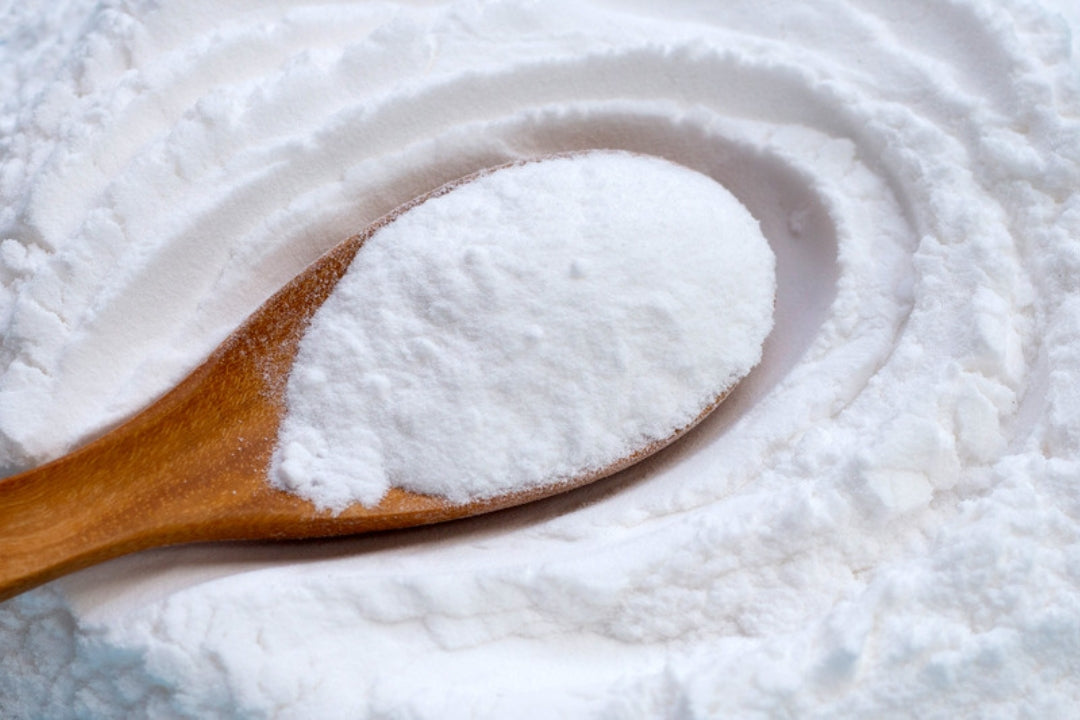
Baking soda, or sodium bicarbonate, is genuinely good at neutralising odour. That is why it ends up in so many natural formulas, and in the back of so many fridges. The problem is its pH.
Your skin sits at a slightly acidic pH, somewhere around 4.7 to 5.5. Baking soda is alkaline, up around 9. When you rub something that alkaline into a warm, occluded, frequently shaved area several times a week, you are repeatedly pushing your skin out of its comfortable range. For some people nothing happens. For plenty of others, the result is irritation, redness, itching, and that distinctive raw, burning feeling.
It is not a sign that you have sensitive skin in some unusual way. The underarm is just a demanding bit of real estate: thin skin, constant friction, heat, moisture, and a razor passing through regularly. Baking soda asks a lot of it.
The frustrating part is that this single ingredient has convinced a lot of people that natural deodorant simply does not agree with them. It is worth saying clearly: the category did not fail you. One harsh ingredient did.
The gentler alternative that still actually works
The obvious worry when you drop baking soda is that you are trading comfort for performance, and you will be left fresh-faced and faintly smelly. You are not.
The ingredient doing the heavy lifting in a well-made baking soda free deodorant is usually magnesium. It neutralises odour effectively, but it does it without dragging your skin's pH into alkaline territory. Same outcome, far kinder route. If you want the longer version of why this one mineral changed natural deodorant, we wrote about why magnesium is a genuine game-changer here.
Around the magnesium, a good sensitive-skin formula adds ingredients that soothe rather than provoke. Centella Asiatica, long used to calm and support skin. Chamomile, for the same reason. Witch hazel to handle surface moisture gently. Arrowroot to keep things dry without grit. The whole point is a deodorant that respects the fact that your underarm has had a hard enough week already.
Every AporeNaturals deodorant is built this way: baking-soda-free, magnesium-based, and formulated for sensitive skin from the start rather than as an afterthought. You can see the full ingredient logic here if you like to read labels before you trust them, which, if you have read this far, you probably do.
How to calm your skin before you try again
If your underarms are currently unhappy, give them a short reset before reintroducing any deodorant.
- Pause for a few days. Let the irritation settle rather than layering more product onto inflamed skin.
- Skip shaving the area until it calms. A razor over already-raw skin is a bad combination.
- Keep it simple. A plain, fragrance-free moisturiser is enough. This is not the moment for actives or anything "brightening."
- Reintroduce gently. When you go back, start with a baking-soda-free, magnesium-based formula and apply it to calm, dry skin.
If irritation has been a recurring theme for you, not just a one-off, our guide to preventing and soothing underarm rashes goes through it properly.
"But it worked at first, then started burning"
This is a common and confusing pattern, so it is worth naming. Baking soda irritation often builds over time rather than hitting on day one. The first week feels fine. By week three, your skin has had enough repeated alkaline exposure that it starts to protest. So people assume something else changed, a new shirt, a new detergent, stress, when the deodorant was the constant all along.
If your timeline looks like that, baking soda is the most likely suspect. Switching to a gentler base usually settles it within a week or two.
If your skin was already reactive
Some people arrive at the baking soda problem with skin that was sensitive to begin with: eczema-prone, easily flushed, quick to react to a new product. If that is you, a little extra care pays off.
Patch test before you commit. Apply a small amount to the inside of your forearm rather than straight onto your underarm, and leave it a day or two. If your skin stays calm, move to the underarm. It is a small delay that saves you a much worse week.
Watch the usual suspects, not just baking soda. Synthetic fragrance, certain essential oils in high concentrations, and alcohol can all irritate reactive skin. The shorter and more recognisable the ingredient list, the easier it is to work out what your skin actually objects to. This is exactly why we keep our ingredient list transparent and readable rather than hidden behind the word "fragrance."
And give your skin credit for having a memory. If it has been irritated recently, it will react faster the next time. Let it fully recover before reintroducing anything, even a gentle formula.
A note on scent and sensitive skin
Fragrance is the other thing that can irritate underarms, especially synthetic fragrance. If your skin is reactive, look for deodorants scented with essential oils rather than synthetic fragrance blends, and introduce a new scent one at a time so you know what your skin is responding to.
If you want to test a couple of gentle options without committing, the Mix and Match Trio is an easy way in. The Lavender and Lime is a soft, calming choice if your skin has been through it lately and you want something low-drama.
Frequently asked questions
Why does my natural deodorant burn or sting? Almost always baking soda. Its alkaline pH clashes with your skin's naturally acidic pH, and repeated exposure on thin underarm skin causes irritation. Switching to a baking-soda-free, magnesium-based formula resolves it for most people.
Is baking soda free deodorant as effective? Yes. Magnesium neutralises odour just as capably without the irritation. You are losing the harshness, not the performance.
How long does a baking soda rash take to heal? Once you stop using it, mild irritation usually calms within a few days to a week. Avoid shaving the area and keep it simple while it recovers. If it is severe, weeping, or not improving, see a pharmacist or doctor.
Can I be allergic to natural deodorant entirely? True allergy to every natural deodorant is rare. Far more often it is one ingredient, usually baking soda or a synthetic fragrance. Identifying and avoiding that single culprit is the fix.
The short version
If natural deodorant has been burning your underarms, baking soda is the likely reason, not natural deodorant as a category. Give your skin a short rest, then come back with a baking-soda-free, magnesium-based formula made for sensitive skin. You get the odour control without the raw, stinging trade-off, which is how it should have been all along.
New to all this and not sure where to begin? Our complete guide to choosing a natural deodorant is a calm place to start.
Keep reading