Does Natural Deodorant Work in Humidity? An Aluminium-Free Reality Check
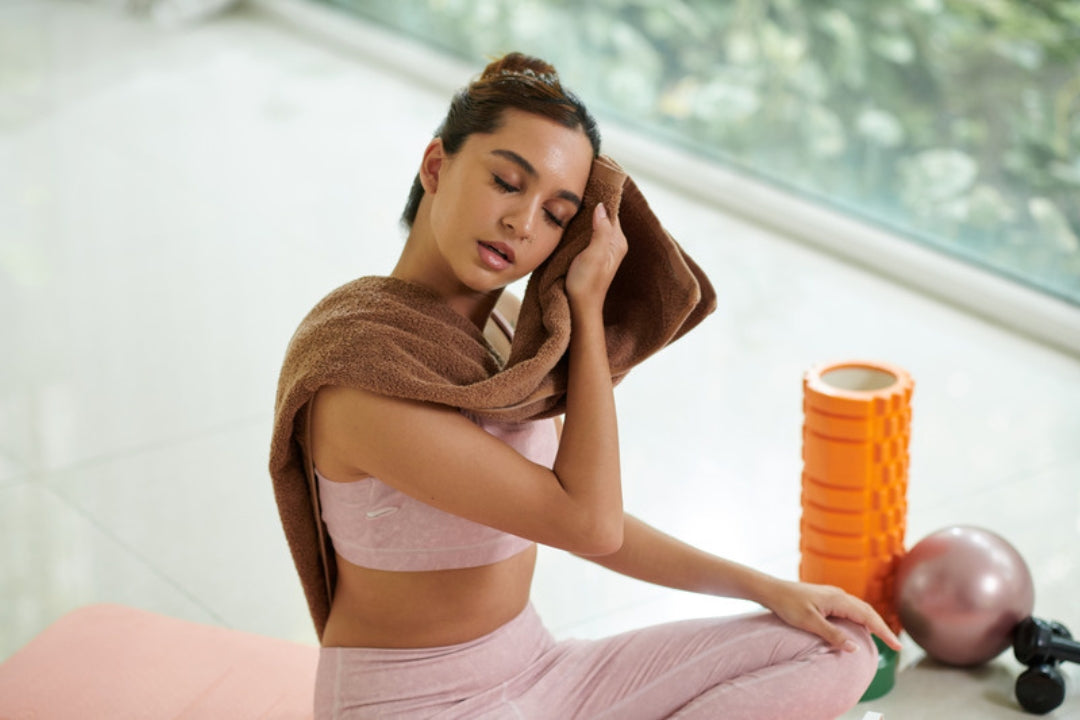
Here is the question every person who has ever sweated through a shirt eventually asks: can a natural deodorant really hold its own when the air feels like a warm towel pressed to your skin?
It is a fair thing to be suspicious about. Most natural deodorants were formulated by people who have never stood at a bus stop in 90% humidity at 8am, already regretting their outfit. If a formula was tested in a dry, air-conditioned lab in a temperate country, you have every right to doubt it will survive a real tropical morning.
So let us be honest about what works, what does not, and why the climate you live in changes the entire conversation.
First, what "natural deodorant" actually has to do
A quick reset, because the category is genuinely confusing. A conventional antiperspirant uses aluminium salts to plug your sweat ducts so less sweat reaches the surface. A natural, aluminium-free deodorant takes a different route. It does not try to stop you sweating. It works on the thing that actually causes odour, which is bacteria, and it manages moisture rather than blocking it.
That distinction matters enormously in humidity. In a hot, sticky climate your body needs to sweat. Sweating is how you cool down. A product whose whole job is to shut that process off is fighting your own thermostat, and in tropical heat that is a losing battle anyway. The smarter question is not "how do I stop sweating" but "how do I stay fresh while my body does the sensible thing."
The humidity problem, explained without the drama
Humidity makes everything harder for one simple reason: sweat evaporates slowly. In dry air, sweat lifts off your skin almost as fast as it appears, taking heat with it. In humid air, it lingers. It sits. And warm, damp skin is exactly the environment odour-causing bacteria love most.
This is why a deodorant that performs beautifully in London or Melbourne can fall apart in Singapore by mid-morning. The formula was never asked to manage moisture that refuses to leave. It was asked to smell nice in conditions that do half the work for it.
A deodorant built for the tropics has to do three things at once: neutralise odour at the source, help manage the moisture sitting on your skin, and do it without irritating skin that is already warm and a little vulnerable. That is a higher bar, and most products do not clear it.
So, does aluminium-free actually hold up?
Yes, but only when it is formulated for the job. This is the part worth being precise about, because "natural deodorant does not work" and "that particular natural deodorant was not built for your climate" are two completely different statements, and the first one gets repeated far too often.
The ingredients that earn their place in a humid climate are specific. Magnesium is the quiet workhorse: it neutralises odour gently, without the irritation that baking soda is famous for. Witch hazel is naturally astringent and helps tone down excess surface moisture. Arrowroot absorbs damp while still letting skin breathe, which matters when the air itself is already saturated. Soothing botanicals like chamomile and Centella Asiatica keep the whole thing kind to skin.
That combination is what holds up through a commute, a meeting, and the walk to lunch. Not because it performs a magic trick, but because each ingredient is doing something the climate actually demands.
This is the thinking behind every AporeNaturals formula. They were developed in Singapore, for Singapore weather, which is a useful shortcut: if a deodorant survives here, it is comfortably overqualified for a mild summer anywhere else. Our full breakdown of what genuinely works in this heat goes deeper if you want the local detail.
What to actually expect when you make the switch
Honesty matters more than a sales pitch here, so two real things to know.
You may sweat a little more at first. When you stop using an antiperspirant, your sweat glands wake back up. They were being plugged, and now they are not. For a week or two this can feel like more moisture than you are used to. It settles. This is your body recalibrating, not the deodorant failing. We walk through that whole adjustment window in why your natural deodorant seems to stop working, which is worth a read before you give up on day four.
Reapplying is allowed. Somewhere along the way we absorbed the idea that one swipe in the morning should last sixteen hours through anything. In a temperate climate, maybe. In the tropics, a quick reapply after the gym or before an evening out is completely normal, and not a sign your product is weak. It is a sign you live somewhere hot.
One myth worth dropping on the way
You will sometimes hear that the extra sweating after you quit antiperspirant is your body "releasing toxins." It is a nice story, and it is not true. Your liver and kidneys handle detoxification. Your sweat is mostly water and salt, not a waste-disposal system. What you are feeling in those first couple of weeks is simply your sweat glands working freely again after being plugged. No detox, no purge, just normal function returning. It is worth knowing, because the myth makes people panic and quit right before things settle.
How to pick one that will actually survive your day
A short, practical filter:
- Look for magnesium rather than baking soda if you have ever had underarm irritation. Same odour control, far gentler. If reactions are a recurring problem, our guide to calming an underarm rash is a good next stop.
- Check that it manages moisture, not just scent. Witch hazel and arrowroot are the tells.
- Be sceptical of anything not tested in real heat. A formula proven in a humid climate has cleared the hardest version of the test.
If you want to try without committing to a full-size everything, the Mix and Match Trio lets you find the scent and feel that suits your skin and your day. The Eucalyptus and Bergamot is a good place to start if you like something crisp and a little sharp in the morning.
Frequently asked questions
Does natural deodorant stop you sweating in humidity? No, and it is not meant to. It manages odour and surface moisture while letting your body cool itself, which is exactly what you want in heat. If you need to genuinely reduce sweat volume, that is an antiperspirant, and that comes with the aluminium trade-off.
Why does my natural deodorant stop working by lunchtime? Usually one of two reasons: it was not formulated for humidity, or you are still in the early adjustment period after quitting antiperspirant. A magnesium-based formula built for the tropics, plus a little patience through the transition, fixes most of it.
Is aluminium-free deodorant better for tropical climates? It is better suited to how your body actually behaves in heat. Blocking sweat works against your cooling system, while a well-built aluminium-free formula works with it. The key word is "well-built," which is why ingredients matter more than the label.
Can I reapply natural deodorant during the day? Yes. In a hot climate, a midday top-up is normal and sensible, not a flaw in the product.
The short version
Natural deodorant absolutely works in humidity, as long as it was actually designed for it. The failures people complain about almost always trace back to a formula built for a gentler climate, or a switch abandoned during the two-week adjustment. Pick something with magnesium and real moisture management, give your body a moment to adjust, and the tropics stop being the deal-breaker everyone assumes.
If you want the full rundown of what to look for before you buy, our complete guide to finding the best natural deodorant in Singapore takes it from here.
Keep reading