Sore Legs After Leg Day: Magnesium Cream vs the Foam Roller

You know the walk. The one where stairs become a personal enemy and sitting down on a low chair requires a plan. Leg day was two days ago and your quads have apparently decided to file a formal complaint.
So you reach for the foam roller, because that is what everyone tells you to do, and you spend ten minutes wincing your way up and down your thighs wondering if this is actually helping or just a socially acceptable form of self-harm. Then you wonder if there is a better way.
There is a case for both the roller and something you have probably not tried yet: a magnesium cream. They are not really competing for the same job, and once you see why, the sore-legs routine gets a lot more effective.
What is actually happening in those sore muscles
The soreness that shows up a day or two after a hard session has a name: delayed onset muscle soreness, or DOMS. It comes from tiny, normal microtears in the muscle fibres you worked, plus the inflammation and fluid shift your body sends in to repair them. It is not lactic acid, despite what the gym folklore says, and it is not really a sign that anything went wrong. It is a sign that the muscle was asked to do something new or harder than usual.
The repair process itself is a chemistry job as much as a mechanical one. Muscles contract and relax using a tightly managed exchange of calcium and magnesium at the cellular level. Calcium tells the muscle to contract, magnesium helps it let go and reset. When magnesium is running low, that release step gets sluggish, which shows up as tightness, cramping, and muscles that feel like they are still bracing long after the workout ended.
This matters more than most people realise if you train in a hot, humid climate. You lose magnesium through sweat, and if you are training in Singapore weather, you are sweating a lot more than the fitness content filmed in a cool studio somewhere else would suggest.
The foam roller: useful, but it is only doing half the job
The foam roller works through pressure. Rolling over a tight muscle applies mechanical force that can temporarily ease muscle tension, improve blood flow to the area, and loosen up fascia, the connective tissue wrapping your muscles. For a lot of people it genuinely helps mobility and makes the next session feel less locked up.
But it has real limits. It is uncomfortable enough that plenty of people skip it entirely, which means zero benefit. The relief it gives is often temporary, fading within hours as the tissue tightens back up. And critically, it does nothing for the underlying chemistry of recovery. You can roll a muscle for twenty minutes and still be short on the mineral that helps it actually relax and repair. Mechanical pressure and cellular replenishment are two different problems, and the roller only solves one of them.
Where magnesium cream comes in
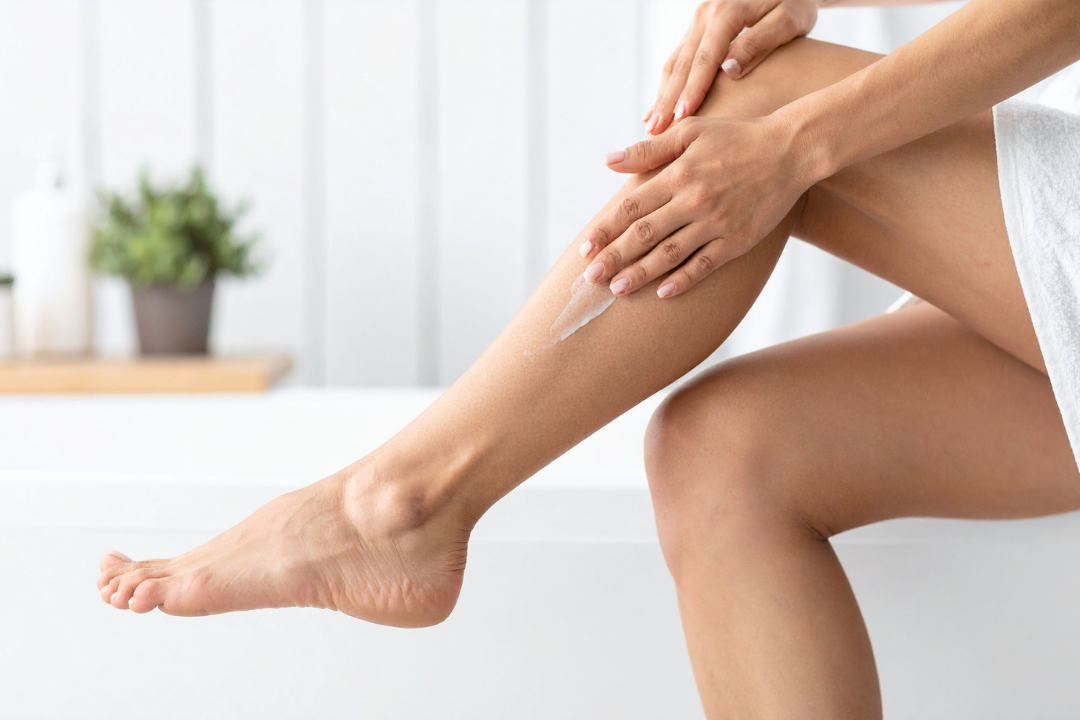
This is the piece the roller cannot touch. Massaging magnesium cream into sore legs does two things at once. First, the massage itself brings the same mechanical benefits as rolling, blood flow, loosened tissue, a signal to your nervous system that the workout is over and recovery mode can start. Second, and this is the part that matters, it replenishes the magnesium your muscles used up and sweated out, giving the contract-and-release cycle the raw material it needs to actually settle down.
It also does something a roller cannot: it calms your nervous system, not just your muscle tissue. Magnesium supports normal nervous system function, which is part of why a lot of people use it as a wind-down habit and not just a recovery one. We go deeper into that side of things in our piece on magnesium and stress, and if leg day soreness is also costing you sleep, magnesium cream for sleep is worth a read too.
If you want the fuller picture of why this mineral matters so much and how easy it is to run low on it, our magnesium explainer covers it without the supplement-aisle jargon.
Why we are confident about ours
Here is where we stop being modest. Our magnesium cream is the only magnesium cream made in Singapore. That is not a nice-to-have geography fact. It means it was built for exactly the climate you are training and sweating in, by people who use it themselves after the same humid sessions.
It is also:
-
Fragrance-free. No synthetic scent fighting with your gym bag or your skin post-workout.
-
All natural. A short, readable ingredient list, laid out in full on our ingredients page.
-
Safe for kids. Useful if you have a young athlete in the house with their own sore-legs complaints.
-
Safe for sensitive skin. Formulated to soothe, not sting, which matters when you are massaging it into skin that has just had a hard workout.
And it behaves the way a post-training product should: fast-absorbing, non-greasy, and it will not stain your sheets or your favourite leggings. You massage it in, it sinks in, you get on with your evening.
This is not a niche indie product either. It is already sitting on shelves at Tangs and is a bestseller at The Green Collective, alongside a wellness clinic in Western Australia that stocks it for exactly this kind of recovery use. You can see the full list on our stockists page. Worth knowing if you would rather see it in person before ordering.
Foam roller vs magnesium cream: pick both, honestly
The honest answer to "which one should I use" is that they are not really rivals. The roller handles the mechanical side, breaking up tightness and improving circulation in the moment. The cream handles the chemistry side, replenishing what your muscles used up so the contract-and-relax cycle can actually reset, plus a nervous-system assist the roller cannot offer.
If you only have time for one, the cream edges it, because massaging it in gives you a version of the mechanical benefit anyway, plus the mineral replenishment the roller cannot provide. But the two together, roll first to loosen up, then massage the cream into the same muscles, is the combination most people find works best.
How to actually use it after leg day
Nothing complicated, which is the point.
Apply it within an hour of finishing your session, or before bed if that suits your evening better. Both timings work. Consistency matters more than precision here.
Massage a generous amount into quads, hamstrings, calves and glutes. Take an extra minute on whichever muscle group felt the hardest hit. The massage itself is doing work, not just the product.
Roll first if you are going to roll at all, then apply the cream. Loosen the tissue mechanically, then give it what it needs to actually recover.
Use it after every hard session, not just the brutal ones. The muscles that get topped up consistently tend to feel less locked up the next day, which is a much better outcome than reaching for relief only after you are already limping.
If your deodorant and skincare routine is already leaning natural, this fits the same shelf. Our aluminium-free deodorants are built for the same tropical, sweaty conditions your legs are training in.
When it is more than normal soreness
Worth saying plainly: DOMS is uncomfortable but it is not an injury, and it should ease within three to five days. Sharp, localised pain, swelling, or an inability to bear weight on the leg is a different situation and deserves a proper assessment from a doctor or physiotherapist, not a cream or a roller. Magnesium cream and foam rolling are recovery tools for normal training soreness, not treatment for an injury.
Frequently asked questions
Does magnesium cream actually help with sore muscles, or is that just marketing? Magnesium plays a real, well-established role in normal muscle function, including the release phase of muscle contraction. Topping it up, especially after sweating it out during exercise, gives your muscles more of what they need to reset. It is not a miracle cure for DOMS, but it addresses a genuine piece of the recovery chemistry that a foam roller cannot touch.
Should I use magnesium cream instead of a foam roller, or with it? With it, ideally. Roll to loosen the tissue mechanically, then massage in the cream so your muscles get the mineral replenishment on top of the massage benefit. If you only have time for one, the cream gives you both a massage effect and the chemistry support.
How long until I notice a difference? Some people feel looser after the first use because of the massage itself. The deeper benefit, muscles that recover faster and feel less locked up the morning after training, tends to show up with consistent use over a couple of weeks, similar to most magnesium habits.
Is your magnesium cream safe to use every day after training? Yes. It is fragrance-free, all natural, and formulated to be gentle on skin, which is exactly why it is safe for daily use, for sensitive skin, and for kids. Patch test first if you have particularly reactive skin, as with any new product.
The short version
Sore legs after a hard session are a chemistry problem as much as a mechanical one. The foam roller loosens things up temporarily but does not replenish what your muscles used. Magnesium cream does both: a genuine massage benefit plus the mineral your muscles actually need to relax and repair, made fragrance-free, all natural, and right here in Singapore for exactly this climate.
Ready to add it to your post-workout routine? Meet the magnesium cream here.
Keep reading