Do You Really Need Clinical Strength? A Reality Check for Heavy Sweaters
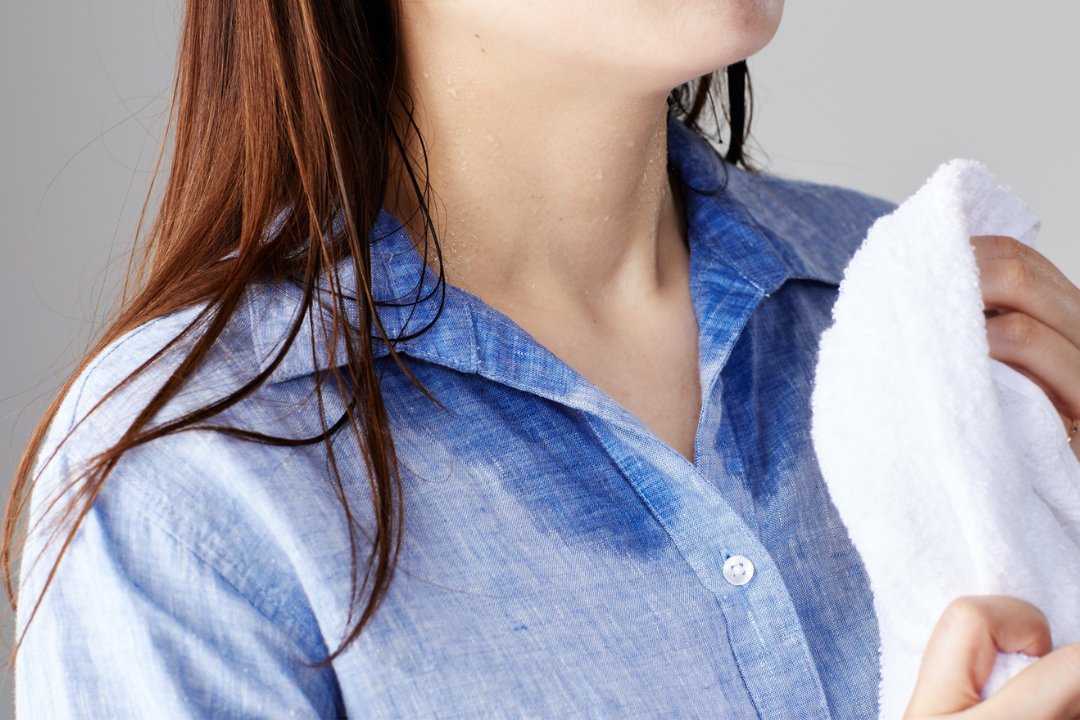
If you sweat a lot, you already know the escalation ladder by heart. Regular deodorant stops working, so you move to antiperspirant. Antiperspirant stops working, so you move to clinical strength. Clinical strength stops working, or starts burning, and the next suggestion is a prescription. Nobody at any point asks why the ladder keeps going up. They just hand you the next rung.
We want to slow that down for a second, because "clinical strength" sounds like a medical upgrade, and it isn't. It's a higher dose of the same ingredient, aluminum zirconium or aluminum chloride, applied the same way, to the same skin that's already struggling with it. More of the thing that stopped working rarely becomes the thing that works. It just becomes more of the thing that stopped working.
What "clinical strength" actually means
There's no regulatory body handing out a clinical license here. "Clinical strength" is a marketing tier, not a clinical classification. It means the formula carries a higher percentage of aluminum compound, usually in the 20-25% range versus the 10-15% in standard antiperspirants. The mechanism is identical either way: the aluminum salts dissolve in sweat, form a gel-like plug, and physically block the sweat duct.
That's the entire trick. It's not fighting bacteria, and it's not regulating your body's temperature system. It's a plug. A bigger dose makes a bigger plug, which blocks more ducts, which is why it "works better" for a while. It's also why the skin under your arms, some of the thinnest and most absorbent on your body, ends up irritated, and why a lot of heavy sweaters end up in a cycle of burning, stopping, healing, then going back to the same product because the alternative is being wet.
This isn't a scare piece about aluminum causing anything dramatic. The actual, well-documented cost is simpler and less dramatic than the forum threads suggest: contact irritation, texture changes in the skin over time, and a product that keeps needing a higher dose to do the same job, because occlusion isn't a long-term relationship with your skin, it's a workaround.
What heavy sweating is actually telling you
Here's the part that gets skipped in the clinical strength conversation: sweating and smelling are two separate problems, and only one of them is actually unpleasant to anyone, including you.
Sweat itself is odorless. What you're smelling is bacteria on your skin breaking down the proteins and fats in sweat, particularly in the apocrine glands concentrated in your underarms. A heavy sweater doesn't necessarily have an odor problem proportional to their sweat volume. They have a bacteria-and-moisture environment that's larger than average, which is a different thing to solve than "produce less liquid."
Antiperspirants solve the volume. Deodorants solve the bacteria and the odor compounds. If you've been stacking higher and higher antiperspirant doses hoping to also solve the smell, you've been solving the wrong variable at increasing cost to your skin. Our magnesium-based deodorants work by neutralizing odor-causing compounds and keeping the bacterial load down, without blocking the duct itself. You still sweat. You stop smelling like it.
Why "doesn't work for heavy sweaters" is the wrong conclusion
We hear this a lot: "I tried a natural deodorant once and it didn't work, I sweat too much for that." Almost always, what happened is a direct swap, same amount of product, same timing, same expectations as an antiperspirant, on the first day. That's not a fair test of a formula that's solving a different problem.
A heavy sweater switching to an aluminum-free deodorant needs to adjust three things, not swap one product for another and hope for parity by lunchtime:
Reapplication is normal, not a failure. Without the plug, your body sweats at its normal rate. The deodorant's job is to keep that sweat from turning into odor, which means a midday top-up on high-output days isn't the product underperforming, it's the product doing exactly what it's designed to do. We wrote a full breakdown of the midday-smell question in why you smell by 2pm (it's not the sweat), worth reading if you're mid-transition and second-guessing yourself.
The first two weeks are a recalibration, not a verdict. Skin that's been managed by occlusion for years has its own bacterial and sweat-gland adjustment period once that stops. We cover this in detail in why your natural deodorant stopped working, which is really about the opposite problem but explains the same underlying skin-adjustment window.
Fabric and application timing matter more than they did with antiperspirant. Apply to clean, fully dry skin, ideally at night as well as in the morning if you're a heavy sweater, since the formula has time to bind to skin rather than competing with active sweat. Breathable fabrics help the whole system work with you instead of against you, which matters more here than it ever did with a plug-based product.
What actually helps, if you sweat a lot and want out of the aluminum escalation
Our deodorants are built on magnesium rather than baking soda or aluminum, specifically formulated for Singapore's heat and humidity rather than a temperate climate where most "natural deodorant" advice originates. That distinction matters more than scent does. A formula designed for a dry, 20-degree climate was never going to hold up through a humid commute, and a lot of "natural deodorant doesn't work" feedback traces back to exactly that mismatch rather than the ingredient itself.
If you're a heavy sweater specifically, a few practical moves help:
-
Reapply once midday on high-output days. It's maintenance, not malfunction.
-
Go with lighter, breathable fabrics under the arms where you can.
-
Give it two to three weeks before judging. Your skin was calibrated to a plug; it needs time to recalibrate to nothing blocking it.
-
If you want to find your preferred strength and scent without committing to a full-size bottle of each, the Mix & Match Trio lets you try a few before you settle.
For a side-by-side on what actually changes in your skin and routine when you drop the aluminum altogether, our piece on deodorant vs antiperspirant goes through the mechanism difference in more detail than we have room for here.
The honest trade-off
We're not going to tell you natural deodorant is a frictionless upgrade for every heavy sweater, because that's not true and you'd find out within a week anyway. The trade-off is real: you will still sweat. What changes is that you stop needing an increasingly aggressive product to manage a side effect of blocking a bodily function, and you stop the irritation cycle that comes with it. For most heavy sweaters we hear from, the honest version of that trade is one they're glad to make once they've made it through the adjustment window, which What Happens When You Switch to Natural Deodorant covers if you want the full week-by-week picture before you start.
If you're very physically active and sweating is less about underarm biology and more about training volume, our note on natural deodorant that survives a spin class in the tropics is the more relevant read.
Frequently asked questions
Is clinical strength antiperspirant actually bad for you?
There's no evidence it causes serious harm for most people, but it's also not solving odor, only blocking sweat ducts with a higher concentration of aluminum salts. The realistic downside is skin irritation and a need for ever-higher doses as skin adapts, not a dramatic health risk.
Why does natural deodorant feel like it's not working at first if I sweat a lot?
Because it isn't designed to stop sweat, only odor, so if you're expecting dryness you'll notice the wetness immediately and may miss that the smell is actually under control. Give it two to three weeks and judge on odor, not moisture.
Can heavy sweaters use natural deodorant long-term, or is it just a phase thing?
Long-term is exactly where it tends to do better than antiperspirant, since there's no occlusion to escalate and no irritation cycle to manage. The adjustment period is the hard part; after that, most people find it's lower-maintenance, not higher.
Do I need to apply natural deodorant more than once a day?
If you're a heavy sweater, a midday reapplication on demanding days is common and not a sign of failure. It's the same logic as reapplying sunscreen: the product does a job for a window of time, and heavy use shortens that window.