Why Deodorants Built for Dry Climates Fail in Humidity
You buy a deodorant that has thousands of glowing reviews. You put it on. By mid-morning it has given up, and you are standing in a lift wondering if the reviews were written by people who live somewhere with actual seasons.
They probably were. Most of the deodorants sold to you were formulated in, and tested for, dry air. Then they get shipped to Singapore, or Bangkok, or the middle of a Jakarta wet season, and they behave like a tourist who packed only jumpers. The problem usually is not you, and it is not that you sweat more than everyone else. It is that the formula was never built for the conditions you wear it in.
Here is what actually goes wrong, and what to look for instead.
Dry air and wet air are two different jobs
A deodorant has to do three things at once: sit on the skin, control odour, and stay put while you move. In dry climates, the air does half the work for it. Sweat evaporates quickly, the surface of your skin stays relatively dry, and the product has a stable base to grip.
In high humidity, that base disappears. When the air is already saturated with moisture, your sweat has nowhere to go. It lingers on the skin instead of evaporating. So the deodorant is now asked to sit on a warm, damp, slightly moving surface for twelve hours, which is roughly the hardest possible version of its job. A formula tuned for dry Colorado mornings was never asked that question, so it does not have an answer.
The wax problem
Stick deodorants hold their shape because of waxes and hard butters. In a temperate climate that structure is an asset. It gives you a firm, glide-on stick that stays solid at room temperature.
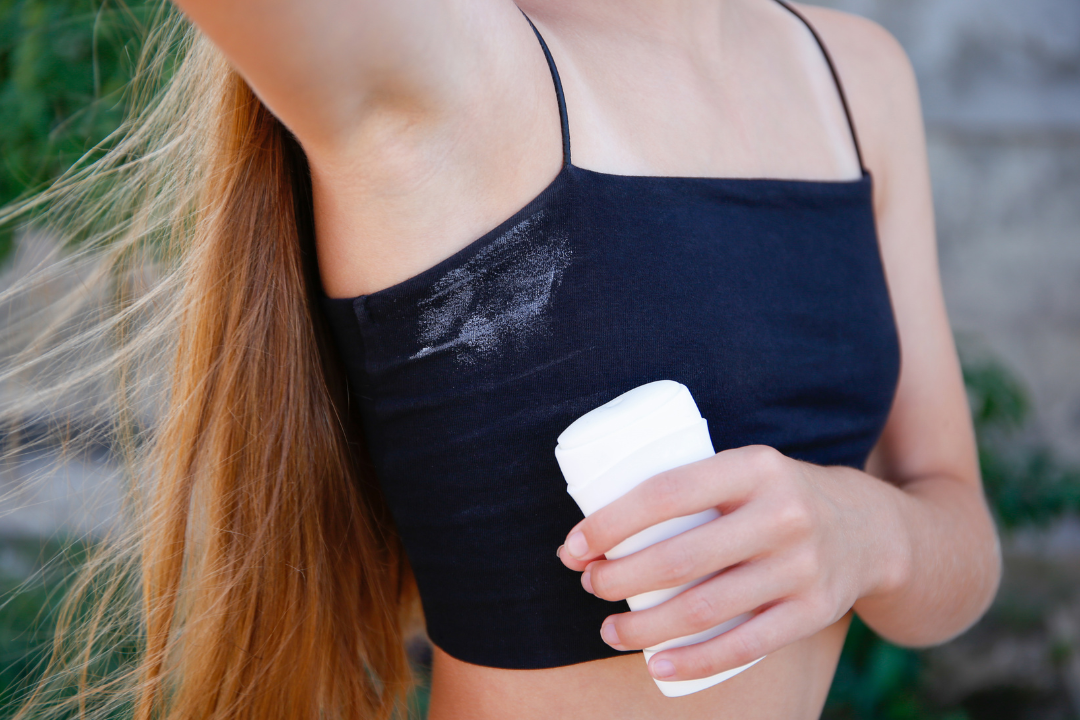
Now put that same stick in a bathroom that sits at 30 degrees with the windows open. The waxes soften. The stick goes slightly greasy on contact, deposits more product than it should, and that excess sits on the skin as a film. Add sweat that cannot evaporate, and the film starts to move. This is the balling, the pilling, and the little grey smears on your shirt that people blame on themselves. It is a formulation mismatch, not a hygiene failure.
Firmer emulsions and lighter application layers hold up far better in heat, which is one of the reasons we test our aluminium-free deodorants in exactly the conditions they get worn in rather than in an air-conditioned lab.
Fragrance oils behave differently in heat
Heat and humidity change how fragrance reads on skin. Warmth speeds up the evaporation of the top notes, so a scent that smelled clean and balanced in a cool shop can turn sharp and heavy an hour into a tropical afternoon. Heavier synthetic fragrance loads, common in mass deodorants because they are cheap and long-lasting on paper, are the worst offenders. They sit on warm skin and amplify.
This matters more than it sounds, because for a lot of people the reason a deodorant becomes unbearable by lunch is not odour breaking through. It is the fragrance itself curdling in the heat. Lighter, cleaner scent profiles built around essential oils tend to age better across a humid day, which is why our Eucalyptus and Bergamot and Lavender and Lime are kept deliberately restrained rather than loud.
Odour control is a different chemistry problem in the tropics
Sweat itself has almost no smell. Odour happens when the bacteria on your skin break sweat down, and bacteria are delighted by warm, damp skin. So the tropics are not just harder on the product, they are also a more active environment for the exact process the product is supposed to interrupt.
A lot of conventional deodorants lean on aluminium salts to plug the sweat glands, which is a blunt way of removing the water the bacteria need. Take that away, as an aluminium-free formula does, and you have to control odour a different way: by making the skin surface a less welcoming place for odour-causing bacteria in the first place. Magnesium does this well, which is part of why our deodorants are built around it rather than around baking soda. If you want the longer version of that story, we wrote about why magnesium works and baking soda often backfires separately.
Why "just reapply" is not the answer
The standard advice for a deodorant that fails in heat is to carry it with you and top up at noon. You can do that. But a formula that needs reapplying every four hours in your own city is telling you something. It was built for a climate where four hours of protection stretches comfortably to a full day because the conditions are gentler.
The goal is not a deodorant you have to babysit. It is one that was designed for a full tropical day from the start, so that reapplying is a choice for a gym session or a long night out, not a daily survival tactic. If you are still in the adjustment window after switching to natural, that is a separate thing worth understanding, and we cover it in how to switch without the stinky phase.
What to actually look for in a humid climate
A few things separate a deodorant that survives the tropics from one that was clearly built for somewhere else.
Look for a firmer base that will not soften into a greasy film at bathroom temperature. Look for a lighter application, since a thick layer has nowhere to go on skin that cannot dry. Look for restrained, essential-oil-led fragrance rather than a heavy synthetic load that amplifies in heat. Look for an odour-control mechanism that works by discouraging bacteria rather than only by blocking sweat, because in humidity you will sweat regardless and you want the smell handled either way. And ideally, look for something formulated by people who live in the climate, because a brand testing in dry air is guessing at your conditions.
That last point is most of the reason AporeNaturals exists. Everything is made in Singapore, for Singapore weather, which is not a marketing line so much as the reason the formulas are shaped the way they are. If you want the full local breakdown, our Singapore deodorant guide goes deeper into what does and does not hold up here. And if you already know your scent leanings, the build-your-own trio is the easiest way to test a few across a real week.
Frequently asked questions
Does natural deodorant work in humidity? It can, but formulation matters more than the "natural" label. A natural deodorant built for dry air will struggle in the tropics for the same reasons a conventional one does. What holds up is a firm, lightly applied, essential-oil-scented formula with an odour-control mechanism that discourages bacteria rather than only blocking sweat.
Why does my deodorant feel greasy or ball up in hot weather? Almost always the waxes. Stick deodorants rely on hard waxes and butters to hold shape, and those soften above room temperature. On warm, damp skin the softened product deposits too heavily and moves, which shows up as balling, pilling, or smears on fabric. A firmer base and a thinner application layer fix most of it.
Is aluminium-free deodorant a bad idea if I sweat a lot? No, but you need the right one. Aluminium blocks sweat, so removing it means the odour has to be managed another way. A well-built aluminium-free formula uses something like magnesium to make skin less hospitable to odour-causing bacteria, so you still sweat but you do not smell. You can read more on our ingredients page.
Should I keep reapplying deodorant through the day? If you have to reapply every few hours just to get through a normal day, the formula is not built for your climate. A deodorant designed for tropical conditions should carry a full day, with reapplication reserved for a workout or a long evening rather than being a daily necessity.